




25 years Snijpunt - Interview with Marco Romein
In this special anniversary year, we are happy to let one of the founders of Snijpunt have his say; Marco Romein. After leaving Snijpunt at the end of 2019, he has not been inactive for long. Amongst others he started a trading company in Spain. The season there is now ending, and Marco is getting a little bit less busy again. Although... besides his work in Spain, Marco also helps a few young entrepreneurs in the Netherlands with their businesses. Blood is thicker than water, so to speak.
Together with Marco we look back to the early days of Snijpunt and to the period prior to the official founding date on June 1, 1998.

What prices will it bring?
After Marco did an internship in Australia for a few months, he ran out of money. As a student, he already worked at bell pepper grower Karel Vromans. He was picking and sorting bell peppers on his spare days as well. Coming from a real grower's family, "what prices will it bring" was - as in most grower's families - a common question. The same was true at Karel Vromans' nursery, where after the auction, the bell pepper prices were announced through the intercom. "I remember the big difference particularly well: 8 guilders a kilo for category 1 quality bell peppers and only 1 guilder a kilo for category 2, where often a small deformation turned out to be the only defect", Marco explains. "With such a big difference in yield, you have to think of something to make that deformation disappear."
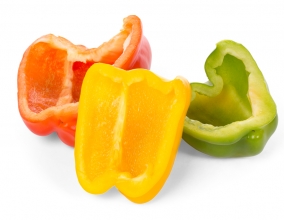
And so, he did: "If you cut them, you don't see the deformation anymore. So basically, you 'just' have to cut them." Karel Vromans had also let this idea cross his mind. This was because he had a client in Brielle where he regularly brought unprocessed bell peppers that were cut there for the hospitality industry and retail. Where it started with a few crates a week, the numbers grew rapidly. There had to be business in prepared vegetables.
Together with Wim Grootscholten, Karel Vromans was one of the first growers to take sales into their own hands. They started the company Rainbow. Karel and Wim were eager to explore a new sales channel for class 2 bell peppers in particular. This then became Marco's graduation project. After meeting the customer in Brielle and talking to a cutting company in Uden, the idea was taking shape. "What if we do not supply whole bell peppers but deliver them cut - halved and cleaned." A good idea, but pricewise there was still a challenge. What the two companies wanted was to buy at fixed prices, on a contract basis. But back then, that was not so common.
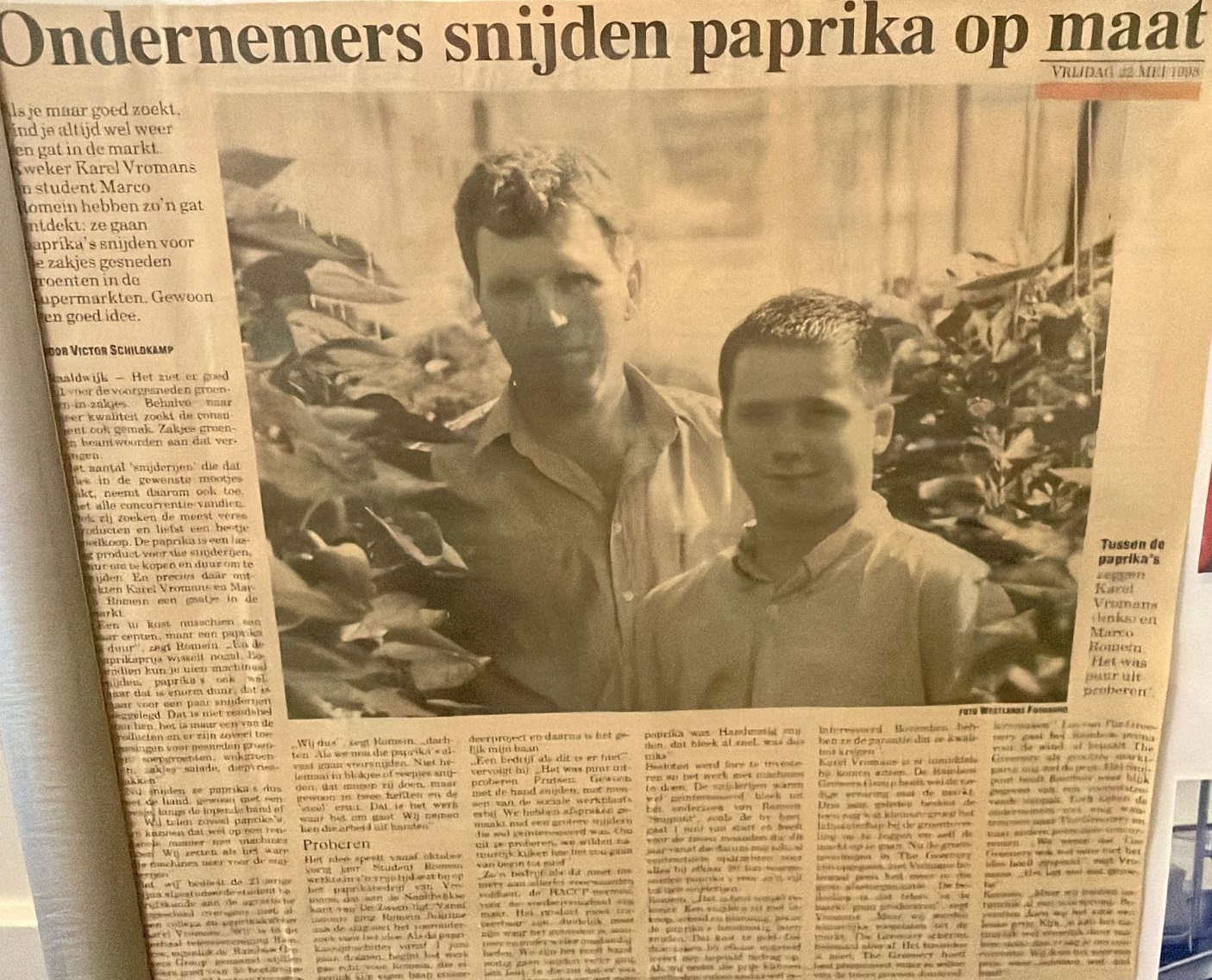
Marco and Karel in 1998
Frankenstein creation
Still, they got started. With some people from the social employment service and a pile of knives, the deformed bell peppers were cut in half and the seeds were removed. In terms of hygiene, not a lot was defined at the time. And soon Marco discovered that working with wooden pallets in a non-cooled shed was no success. However, it did not stop him. He followed an HACCP study and a complete production area with three cooling cells was built in the barn at Karel Vromans: 1 for raw materials, 1 for processing and 1 for expedition. In total they had 600 square metres to make the new product.

That said, it was still all easier said than done. "It was a new product in a new market. So, we had to invent a lot ourselves", Marco explains. "The first production line was a kind of Frankenstein creation; a combination of technology from the food processing industry and horticulture", he laughs. With this, they still managed to produce around 10 to 12 metric tonnes per week.
The first 3 years were not easy to say the least. "It was a huge disaster! Everything that could go wrong, went wrong." Marco spent two years thinking it could be the last day. "People did not really understand. And we did not quite know how to do it ourselves as well. We figured out that there is also such a thing as bacteria that you must do something with. And negotiating fixed prices remained an issue." It was a difficult time, during which all the money for learning did get paid. Meanwhile, beside Marco and Karel, Bjørn was brought on board. He was a fellow student of Marco's and was no longer really in place in his then job at the flower auction. Bjørn became production manager with a laser focus. He kept working on the machinery until even that one bell pepper, at 100 kilos, no longer fell to the ground.
Heading to England
Karel in fact had a vision. He figured they had to head for England with the new product. According to Karel, there, they were 5-10 years ahead of the Dutch market in terms of sales of prepared vegetables and ready meals. Through Ton van Leur, he made contact with the former company Geest (now Bakkavor), which served almost the entire English market. "Ton really turned out to be a kind of mentor for me. I learned a lot from him and watched how he tackled things", Marco tells us.
One of their very toughest customers was keen to outsource the cutting and cleaning of bell peppers. "This did mean that their technical manager came over every month to improve our processes and quality, especially microbiologically. It was quite challenging. We learned how to produce according to the English standard. The requirements there were - in our perception - sometimes excessively high, but the decision was made. We went full steam ahead, so don't whine about it and embrace the 'free' advice. As a result, when the BRC standard was introduced in the Netherlands, we were immediately able to obtain the then highest certificate.”
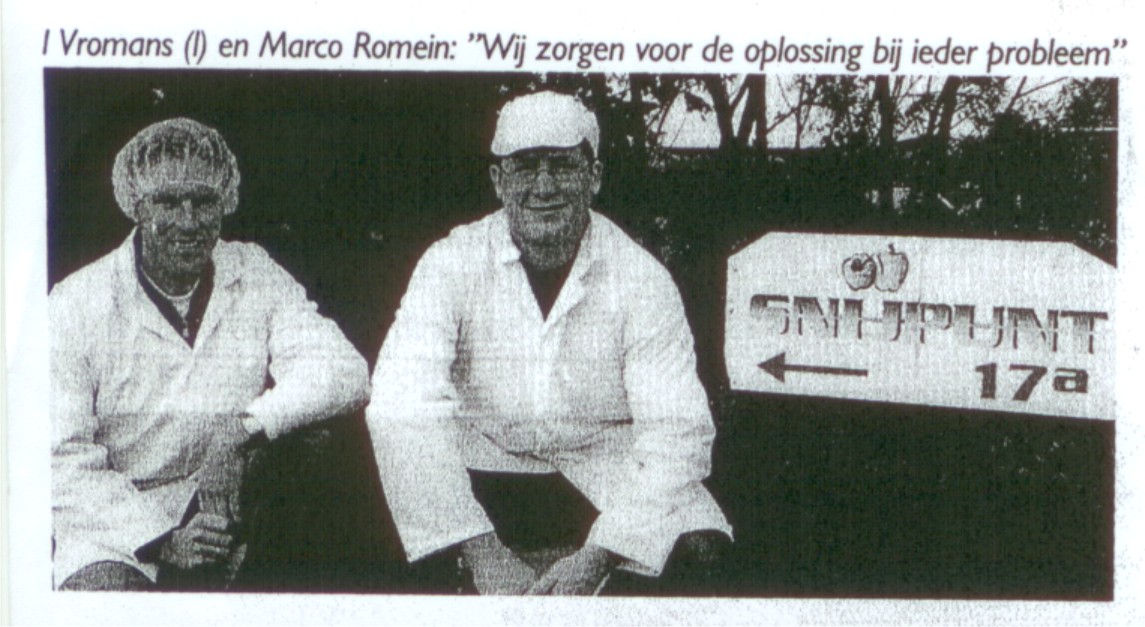
Food processing company
With this UK premium customer coming in, suddenly there was volume. Plus, the customer wanted to pay for it. This meant a real step up in professionalism for Snijpunt. "In this process, we all learned a lot and had to change our mindset," Marco explains. "We were no longer a horticultural company, but a food processing company with our roots in horticulture."
With this realization in their mind, other countries also came into the picture. In countries like Germany and Belgium, for example, they were often laughed at. They did not get the concept of semifinished products. 'That's not something for us,' was a common statement. "Until the entire market for ready-to-cook vegetables experienced strong growth. That's when things changed." The same companies preferred to grow with the same amount of people in-house, rather than with more employees of their own. They did want to outsource the work now and our fixed prices really became an added value. "The companies that did not understand us at first became customers and are probably still customers now", Marco smiles.
Moving from UK to German market
Later, the UK market crashed. Banks collapsed, the pound fell dramatically in value, resulting in lower volumes to England. But still with a delivery frequency of seven days a week. We faced a logistical challenge, as transporters could no longer meet our temperature requirements at lower volumes. "So, we had to shift gears again. Same goal, different path. We used that moment to start studying proper German with the whole team. It has always been our priority to be able to speak to customers properly, in their own language." With that knowledge in our pocket, we entered the German market. This was a lot easier. The market was up for it and the logistics were much less complicated.
"The great thing was that in sales we could promise everything. In production, Bjørn and his team made sure it could be done! And if that meant that everyone from the office also had to go into production, that happened. We really did it together. Difficulties were discussed and solved over drinks on Friday afternoons. And after that, you went back to work as a team." Marco and Bjørn always challenged each other to go just that little bit further than was actually possible.
Expanding with cauliflower and broccoli
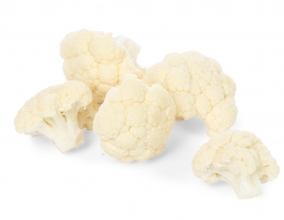
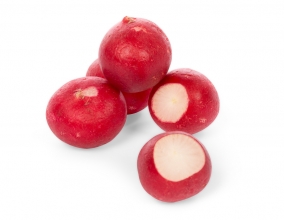
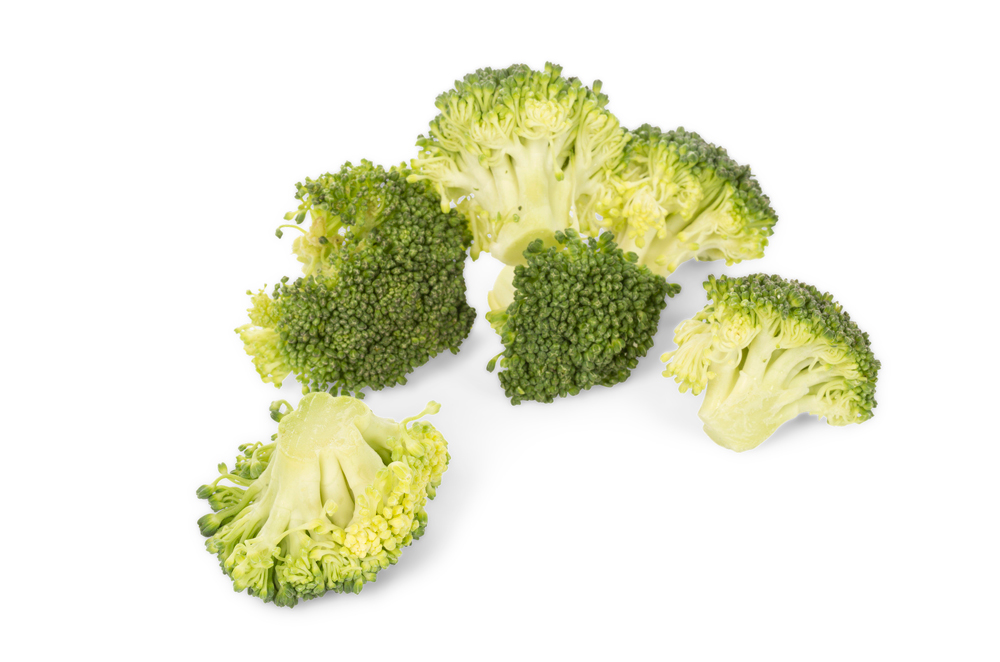
The logistical difficulty in England also indicated that we were quite vulnerable with just bell peppers. After a period of inventorying inconvenient products at customers' premises, the production of cauliflower and broccoli in florets followed. This was also soon joined by cleaned radishes. There are many growers in the region who can deliver these products fresh twice a day. As a result, adding these products in lines quickly became interesting.
"Most importantly, we must always be able to do the processing of cauliflower and broccoli cheaper than the customer himself. This means more efficient and of higher quality."
One customer who makes steam meals, for instance, insisted on having florets no larger than 2-3 cm. He did not want to cut vegetables himself. Instead of producing, he only wanted to put components together to make meals.
In Scandinavia, broccoli florets are used raw in salads. For this, they should not be larger than 3 cm, as they must fit in your mouth at once. "By having us do the cutting, the customer is completely unburdened on these products and saves on labour costs", Marco explains.
"The rock-solid belief in this product has brought us where we are today. Never change your goal, only the way to get there", Marco says proudly.
Machinery
The machinery used by Snijpunt can be seen in operation in very few places at that time. "With our machine supplier, we made the deal that their potential customers could always come and have a look. But if it turned out that they did not want to buy machines, we were going to sell them bell peppers!"
That is also how a Danish customer ended up at Snijpunt. When he saw how quickly the work was done and at what level, he was convinced. He realised he could never achieve that himself.
"We can only tell them we are here and where they can find us if they have a problem", Marco explains. "Going to their premises to tell them to buy our product does not work. Convincing them of our professionalism at our premises does. Showing them that it is an efficient process that is difficult to copy. Especially with multiple products."
Mentor
Marco realises how lucky they were to have a mentor like Ton van Leur. "That was really a period of keeping quiet, observing, learning and just doing. And overcoming problems." Bacteria was really the biggest bump, according to Marco. "You don't know exactly what to look for and you only find out through trial and error."
As Marco knows better than anyone how important a mentor can be, he is now a mentor himself in a scale-up program. He sees this as a kind of Pay-it Forward. "Helping start-ups to avoid traps and keep their focus razor-sharp gives a lot of energy", he says.
When we ask him if he would walk the whole Snijpunt path again, Marco answers with a wholehearted 'yes definitely!' "But then I would gather a few mentors around me earlier, people who have walked the path before. Just so you do not have to invent everything yourself. A few people who don't just tell you what can be done differently, but actually make you see it."
Marco and Bjørn have both left Snijpunt for a few years now. However, they still see each other every week in their joint hobby of car racing.